 English
 Bahasa Melayu
 Suomen kieli
 عربي
عربي  Português
 Français
 Pусский
 Español
Can a Waterproof DC Isolator Be Installed in Direct Sun and Rain?


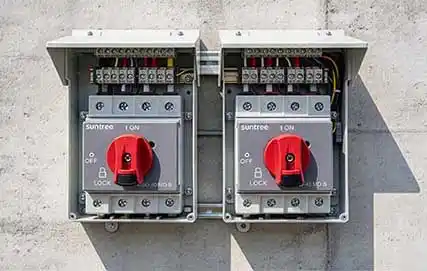
A water-proof isolating switch rated IP66 is designed to withstand powerful water jets and is dust-tight — but that does not automatically mean it can be mounted anywhere outdoors without consequences. Outdoor suitability depends on how UV radiation, thermal cycling, cable entry sealing, and mounting position interact over the lifetime of the installation. This guide examines what solar installers, EPC teams, and electrical designers should verify before mounting an outdoor DC isolator in an exposed location.
What Outdoor Exposure Really Means for a DC Isolator
An IP66 enclosure protects against dust ingress and high-pressure water jets from any direction, making it the baseline for outdoor PV installations. However, IP ratings define laboratory test conditions — not real-world service life. The enclosure must also resist UV degradation, daily temperature swings, and the long-term aging of gaskets and seals. As one industry source notes, real-world stressors include “UV exposure that ages gaskets, temperature cycling that changes gasket compression,” and humidity-driven internal condensation that an IP rating does not claim to prevent.
Rain and Splash Exposure
Rain alone is rarely the primary failure mode for a correctly rated enclosure. The more common issue is water that enters through cable entries, conduit systems, or degraded gaskets rather than through the enclosure body itself. Energy Safe Victoria reports that water ingress in DC isolators — from both rain and condensation — has been identified as the leading cause of unsafe PV systems across multiple inspection campaigns. Water causes corrosion on terminals and switch contacts; this corrosion reduces the conductive area, increases resistance, and can cause the switch to overheat, melt, or in worst cases, catch fire.
UV and Direct Sunlight
UV radiation degrades polymer materials over time. Enclosure plastics, cable gland elastomers, and sealing gaskets are all vulnerable unless the manufacturer has specified UV-resistant materials. Products intended for outdoor PV use should explicitly state UV resistance in their datasheet — for example, many modern DC isolators use UV-resistant and flame-retardant (UL94-V0) enclosure materials. Without this specification, an installer cannot assume that a generic IP66 enclosure will survive years of direct sun exposure.
Daily Temperature Cycling
Temperature cycling drives two distinct risks. First, repeated expansion and contraction stress the enclosure seals and gaskets, gradually reducing their compression and sealing effectiveness. Second, as the enclosure warms during the day and cools at night, air is drawn in and out through any available opening — including breather valves. This “breathing” effect pulls humid air into the enclosure, which can then condense on cooler internal surfaces. Over time, this internal condensation corrodes terminals and switch mechanisms even when no external water has entered.
Where the Isolator Is Mounted Matters
The mounting location determines the actual environmental stress the isolator experiences, which may differ significantly from the ambient temperature reported in weather data.
Open Wall or Rooftop Locations
A dark enclosure exposed to direct sun can become substantially hotter than ambient air. AS/NZS 5033:2021 accounts for this by specifying two different ambient temperature assumptions for outdoor isolators: 40°C for fully shaded locations and 60°C with solar effects for rooftop or externally mounted isolators receiving direct sunlight. An installer selecting a device based on a 40°C rating and then mounting it in direct sun may be operating outside the intended thermal envelope.
Areas Under Partial Shelter
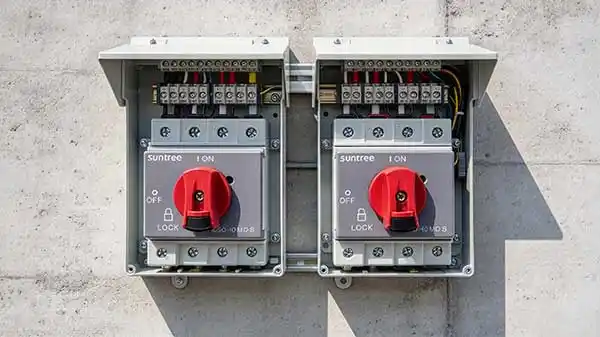
A location under a soffit, overhang, or within 30° of protection from an eave provides meaningful reduction in both direct solar loading and direct rain impact. Energy Safe Victoria recommends installing a shroud over the DC isolator unless it is installed within the 30° protection of a soffit. Purpose-built isolator shades are commercially available and are designed to function as a shroud protecting the enclosure from direct sunlight and rain, as required by AS/NZS 5033:2021.
Locations Close to Other Heat-Producing Equipment
Mounting an isolator adjacent to an inverter, transformer, or other heat-generating equipment raises the local ambient temperature beyond what the isolator would experience in isolation. This compounds the temperature cycling effect and may push internal temperatures beyond the device’s rated operating range. The manufacturer’s datasheet specifies the permissible ambient temperature range — commonly between –40°C and +85°C for quality products, but this must be verified for the specific model.
Cable Entries Are Often More Important Than the Enclosure
A common misconception is that the IP rating of the enclosure alone determines waterproof performance. In practice, the cable entries are the most frequent path for water ingress. AS/NZS 5033:2021 Cl. 4.4.7 sets out several specific requirements: cable glands, conduits, and fittings shall not enter or exit the top face of the enclosure; where entry is via a cable gland, IP-rated glands and multi-hole grommets must suit the number of conductors entering; and sealing with silicone is not permitted unless specified by the manufacturer.
Cable Gland Sealing
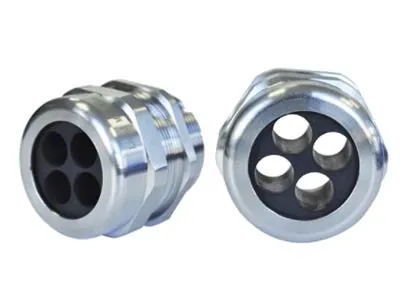
Cable glands must match or exceed the enclosure’s IP rating. A gland rated IP68 provides a more robust seal than IP66, protecting against both water jets and short-term immersion. The gland must also match the cable diameter range — an oversized gland will not compress the seal properly around the cable sheath. Additionally, strain relief must be provided for conductors where conduit is not used to enter the enclosure.
Entry Direction and Water Paths
Entry points must face downward or sideways, never upward. Top entry invites water pooling around glands, while bottom or side entry with drip loops directs water away from the enclosure. Where cable glands enter the side face of an outdoor enclosure, the entry point should be positioned higher than the lowest point of the wiring system, so that water drains away rather than collecting at the entry. Conduit systems running outdoors that terminate into an enclosure must have a drain device fitted at the lowest point.
Unused Cable Openings
Every unused opening must be sealed with a manufacturer-approved blanking plug or grommet. An open entry point rated IP66 is still an open entry point — the enclosure rating applies only when all openings are properly sealed. Inspectors frequently find desert dust or monsoon moisture that has infiltrated through cable entries that were not correctly sealed at installation.
How Outdoor Heat Changes the Installation Environment
The thermal environment inside an outdoor enclosure can differ substantially from the ambient air temperature. Dark-colored enclosures in direct sun can reach internal temperatures well above ambient. This affects the current-carrying capacity of the switch mechanism, the aging rate of internal insulation, and the long-term reliability of the seal materials.
Rather than performing current derating calculations in the field, installers should consult the specific model’s datasheet for its stated ambient temperature range, any derating curves provided by the manufacturer, and the installation conditions under which the device was certified. AS/NZS 5033:2021 explicitly distinguishes between shaded and unshaded mounting conditions, and the device’s certification may be tied to one of these scenarios. If the datasheet does not cover the intended mounting condition, the device should not be assumed suitable.
What to Look for During Routine Outdoor Inspection
Outdoor DC isolators should be included in periodic PV system inspection schedules. Key indicators of degradation include:
-
Enclosure discoloration — yellowing or chalking of the plastic surface indicates UV degradation of the polymer, which may also affect seal integrity.
-
Seal and gasket aging — hardened, cracked, or visibly compressed gaskets lose their sealing capability. Gasket compression changes with temperature cycling and is a known long-term failure mode.
-
Loose cable entries — glands that have loosened due to thermal expansion and contraction or vibration should be re-tightened to manufacturer torque specifications. Loose connections on DC terminals are a documented fire risk.
-
Signs of internal condensation — water droplets on the inside of the enclosure, corrosion on terminals, or discoloration of internal metal parts indicate that moisture has entered. Anti-condensation valves (breather valves) are required where condensation issues exist, and should be verified as functional during inspection.
Frequently Asked Questions
Does waterproof mean a DC isolator can stay in rain permanently?
No. A waterproof rating such as IP66 means the enclosure resists powerful water jets under test conditions. It does not guarantee indefinite performance in rain. The long-term water resistance depends on the cable entry seals, gasket condition, and whether the enclosure is protected from direct rain impact by a shroud or shelter. Water ingress through degraded seals or improperly sealed entries is a well-documented cause of DC isolator failure in PV systems.
Does direct sunlight shorten the life of a DC isolator enclosure?
Yes, unless the enclosure is specifically manufactured with UV-resistant materials. Standard polymer enclosures degrade under sustained UV exposure, becoming brittle and losing structural integrity. Specifying an isolator with a UV-resistant enclosure — as stated in the manufacturer’s datasheet — is essential for exposed outdoor mounting.
Should an outdoor DC isolator still have additional shading?
In many jurisdictions, yes. AS/NZS 5033:2021 requires a shroud over the DC isolator unless it is installed within the 30° protection of a soffit. Even where not mandated by code, a shroud reduces direct solar loading, lowers internal enclosure temperature, and shields the enclosure from direct rain impact — all of which extend service life.
Practical Takeaway for Outdoor PV Projects
Installing a water-proof isolating switch outdoors requires more than checking the IP rating. The enclosure must be UV-resistant, the cable entries must be sealed with correctly sized IP-rated glands and routed to drain water away, the mounting location must account for actual thermal conditions rather than general ambient temperature, and the installation should include shading or a shroud where exposure is significant. Routine inspection of gaskets, cable entries, and internal condensation signs is essential for maintaining long-term safety and reliability. For specific product selection, consult the manufacturer’s installation manual for the model’s rated ambient temperature range, UV resistance specification, and any required installation accessories such as breather valves or mounting brackets.