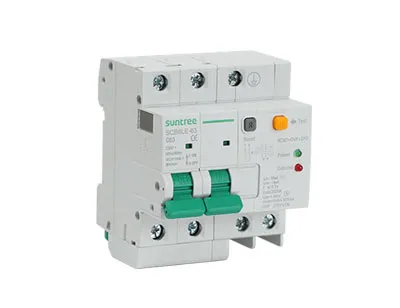
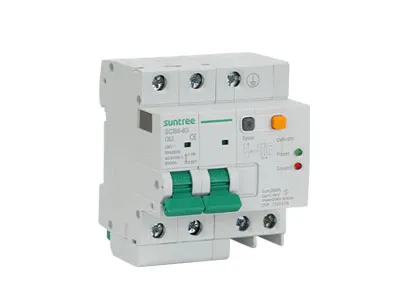
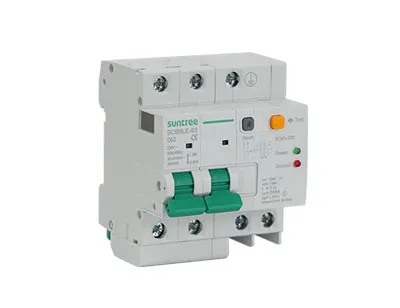
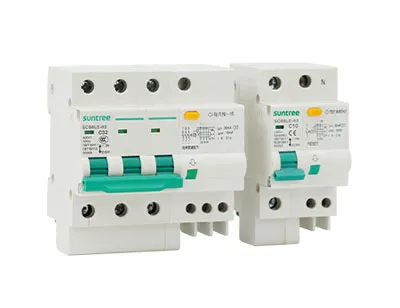
RCD is a general term for residual current protection devices. RCCB is a pure leakage protection circuit breaker, providing only leakage protection without overload or short-circuit protection. RCBO is a leakage circuit breaker with overcurrent protection, offering comprehensive protection including leakage, overload, and short-circuit . ELCB is an older term, modern usage typically refers to the same product category as RCCB . For wiring: 1P is suitable for single-phase circuits, 2P can control both phase and neutral conductors .
30mA is used for direct contact protection (electric shock prevention), suitable for socket circuits in general locations such as residential and office premises, as well as damp environments; 50mA falls between the two, is less commonly used in practice, and is occasionally applied in circuits with higher tolerance for nuisance tripping; 100mA is primarily used for fire protection, suitable for high fire-risk locations such as wood processing plants, warehouses, and gas stations, as well as main incoming circuits in commercial and industrial buildings.
No information found in search results. Based on industry knowledge: voltage-operated ELCB detects voltage on equipment enclosure and has been phased out. Current-operated RCCB detects zero-sequence current and is the current standard. They cannot be mixed. Older ELCB should be replaced with current-operated RCCB.
GET A QUOTE

 English
 Bahasa Melayu
 Suomen kieli
 عربي
عربي  Português
 Français
 Pусский
 Español