 English
 Bahasa Melayu
 Suomen kieli
 عربي
عربي  Português
 Français
 Pусский
 Español
Comparison of AC and DC charging methods


The main types of charging for electric vehicles (EVs) are alternating current (AC) and direct current (DC), which differ in terms of efficiency, speed, and impact on the grid. The following is a detailed comparison of these two charging methods and an outlook on future trends:
Basic Concepts
Alternating Current (AC)
Alternating current (AC) is a common form of current in electrical systems that changes direction periodically. AC is commonly used for household and commercial electricity. When an electric vehicle is charged through a home charging post or a public charging post, it first receives AC power from the grid. Since an electric vehicle's battery can only store direct current (DC), the AC power needs to be converted to DC power in order to charge.
Direct Current (DC)
DC is an electric current that flows in a single direction and is typically used in battery storage devices. The battery pack of an electric vehicle needs to be charged via DC, so most modern electric vehicles are equipped with an on-board AC-DC converter to enable this energy conversion process.
Differences between AC and DC charging
1. Charging speed
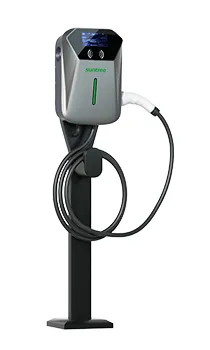
AC EV Charger: AC charging is relatively slow, generally with a power range of 3.5 kW to 7 kW, and usually takes about 8 hours to charge the battery to 80%.
DC EV Charger: DC charging is very fast and can provide up to 40 kW or even more power, allowing most of the charge to be replenished in a short period of time.
2. Switching positions
AC charging: During AC charging, the on-board converter inside the vehicle is responsible for converting the received alternating current into direct current, which is then supplied to the battery.
DC charging: During DC charging, the converter is located in the charging post itself and feeds DC power directly to the batteries in the vehicle without going through the on-board converter.
3. Impact on the power grid
AC charging: Since AC charging relies on the on-board converter, it may cause some load impact on the grid.
DC charging: Although DC charging has less impact on the power grid, the high-power DC charging equipment itself is more costly and larger.
Options for practical applications
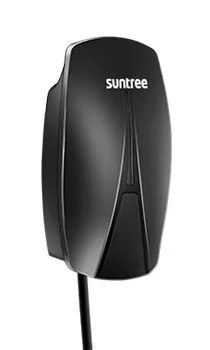
Home charging pile: Most home charging piles use AC EV Charger methods because they are relatively simple and low cost. Users can use standard home outlets for low-power slow charging, or install more advanced charging posts for slightly faster fast charging.
Public charging posts: Public charging posts, on the other hand, may offer either AC or DC charging. For those who need a quick top-up, a DC charging post is more appropriate. However, in some cases, if the public charging post only supports AC charging, an on-board converter is required for energy conversion.
Future Trends
DC EV Charger is expected to become more popular in the future as technology advances and market demand changes. On the one hand, it can significantly shorten the charging time; on the other hand, it can reduce the cost of hardware and improve the efficiency of energy conversion. In addition, wireless charging technology is also gradually developing, and is expected to provide more convenient charging solutions for electric vehicles in the future.
In conclusion, it is very important for car owners to understand the AC and DC charging methods for EVs and their advantages and disadvantages. Choosing the right charging method according to different needs and scenarios will not only prolong the life of the vehicle, but also enhance the overall driving experience.