 English
 Bahasa Melayu
 Suomen kieli
 عربي
عربي  Português
 Français
 Pусский
 Español
Preventing DC Fuse Holder Corrosion in Outdoor PV Systems – Maintenance Guide


Corrosion inside DC fuse holders is one of the most common yet easily overlooked failure points in outdoor photovoltaic (PV) systems. Unlike sudden component failures, corrosion develops slowly—increasing contact resistance, generating abnormal heat, and eventually leading to nuisance fuse blowing or complete string downtime. For operation and maintenance technicians and site managers, understanding how to prevent DC fuse holder corrosion in outdoor PV systems is essential to ensuring long-term system reliability and energy yield.
This guide explains the electrochemical causes of corrosion, visible and thermal warning signs, three proven prevention methods, and a field-tested step-by-step remediation procedure.
Why Corrosion Happens in DC Fuse Holders
The Electrochemical Process
Corrosion in a fuse holder is rarely due to a single factor. When dissimilar metals—such as when tinned copper contacts silver-plated or nickel-plated surfaces in the presence of an electrolyte—come into contact in the presence of an electrolyte, a galvanic cell forms. The less noble metal acts as an anode and accelerates oxidation. Over time, this creates insulating oxides and sulfides that increase electrical resistance.
Common Entry Points for Moisture
Even IP-rated fuse holders can fail if improperly installed. The three most frequent moisture ingress paths are:
-
Aged or cracked sealing gaskets on end caps
-
Hand-tightened caps that do not compress the seal
-
Unsealed or damaged cable entries where PV wires enter the combiner box or fuse holder base
High Humidity Environments
Coastal regions with salt spray, foggy highlands, and areas with long rainy seasons significantly accelerate corrosion. In such environments, standard protection measures often prove insufficient without proactive maintenance.
Signs of Corrosion to Look For
Early detection prevents cascading failures. Use multiple inspection methods during routine walks.
Visual indicators:
-
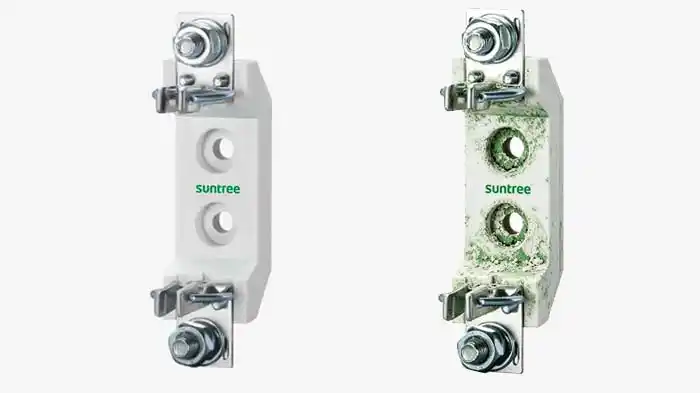
White, green, or blue powdery deposits on fuse terminals or holder contacts
-
Discoloration or pitting on fuse end caps
-
Cracked or brittle fuse holder body
Thermographic indicators:
-
A hot spot on a specific fuse holder that is more than 30°C above ambient temperature, measured with an infrared camera.
Electrical indicators:
-
Unexplained low string current compared to adjacent strings
-
Higher than normal voltage drop across the fuse holder
-
Inverter logs showing “string fault” or “fuse open” despite a functional fuse
Choose the Right Fuse Holder
Material Selection
Not all DC fuse holders are suitable for outdoor PV environments. For preventing DC fuse holder corrosion in outdoor PV applications, prioritize:
-
Contacts: Silver-plated or gold-plated over tin-plated brass. Silver offers lower contact resistance and better oxidation resistance under dry conditions, while gold is preferred for extremely humid or polluted sites.
-
Body material: A thermoplastic with UL 94-V0 flame rating and high UV resistance. Avoid recycled or non-UV-stabilized plastics.
Ingress Protection Rating
-
Minimum IP66 for general outdoor use – dust-tight and protected against powerful water jets.
-
Recommend IP67 for coastal or high-rainfall regions – withstands temporary immersion. IP68 is overkill for most PV combiner boxes but can be specified for submerged applications.
Many field failures originate from using IP65 or lower holders that allow moisture wicking through the cable entry or end cap threads.
Proper Installation Techniques
Even the best hardware fails if installed incorrectly. Follow these three field-proven practices.
Use Dielectric Grease
Before inserting a fuse, apply a thin, even layer of dielectric silicone grease to:
-
The fuse end caps
-
The inside contact surfaces of the fuse holder clips
Dielectric grease does not conduct electricity, but it fills microscopic air gaps, blocks moisture, and prevents fretting corrosion caused by vibration. Do not use conductive grease – that will create a short path.
Torque End Caps Correctly
Plastic end caps with rubber seals require specific torque.
-
Under-torquing leaves a gap for humid air to enter.
-
Over-torquing cracks the plastic or damages threads, permanently compromising the seal.
Use a torque screwdriver for consistency.
Seal Cable Entries
Every cable entry point is a potential leak. Use proper PG (plastic) or metallic cable glands with correctly sized rubber inserts for the PV cable diameter. For unused entries, install blind plugs. Additionally, apply a non-hardening butyl sealant around the cable gland threads inside the combiner box as a secondary barrier.
Regular Maintenance Schedule
A reactive “fix-on-failure” approach is costly. Implement this proactive schedule:
| Interval | Action |
|---|---|
| Every 6 months | Visual inspection without opening: look for discoloration, cracks, or moisture inside transparent covers. Thermal scan of each fuse holder. |
| Every 12 months | Power down, open holders, inspect internal contacts. Clean any light oxidation, reapply dielectric grease. |
| Every 3–5 years | Replace all fuse holders in aggressive environments. Even without visible corrosion, microscopic degradation increases resistance. |
For large sites, use a digital logbook to track individual fuse holder resistance trends.
Step-by-Step Corrosion Remediation
When you find a corroded fuse holder during inspection, do not simply clean and reinstall the old fuse. Follow this proven 8-step process.
-
Safety lockout/tagout – Disconnect the upstream DC isolator and downstream inverter input. Verify zero voltage with a certified DC voltmeter.
-
Open the holder – Unscrew the end cap and remove the fuse. Discard the fuse.
-
Clean the contacts – Lightly abrade the holder’s metal contact surfaces using fine-grit sandpaper or a fiberglass scratch brush. Remove all green/white deposits but avoid removing base plating.
-
Degrease and flush – Wipe away debris with isopropyl alcohol and a lint-free cloth. Do not use WD-40 – it leaves an oily residue that attracts dust and may degrade some plastics.
-
Apply fresh dielectric grease – Coat contact surfaces with a thin layer of silicone dielectric grease.
-
Install a new fuse – Use the same rating as specified on the system label. Push it fully into the clips.
-
Torque the end cap – Tighten to the manufacturer’s specification. Ensure the rubber gasket is clean and undamaged.
-
Re-energize and verify – Turn on DC power and measure the voltage drop across the fuse holder. It should be <50 mV at rated current. Also confirm the string current matches its neighbors.
If the holder body is cracked or the threads are stripped, replace the entire fuse holder. Do not attempt to repair structural damage.
Frequently Asked Questions
Q1: Can I use WD-40 to clean corroded fuse holders?
A: Not recommended. WD-40 is a solvent and water displacer, but it leaves a residue that attracts dust and can degrade some plastics used in fuse holder housings. Use isopropyl alcohol or a dedicated electrical contact cleaner.
Q2: How does corrosion affect fuse operation?
A: Corrosion creates high contact resistance. Under load, this resistance generates heat. The heat can raise the fuse internal temperature enough to melt the fusible element at currents well below its rated value – a classic “nuisance blowing” scenario.
Q3: Are there corrosion-free fuse holders available?
A: No holder is 100% immune. However, models with gold-plated contacts, double O-ring seals, and IP67 ratings can delay corrosion by 5–10 years in most outdoor PV environments. For extreme coastal locations, consider using solid-state string protection as an alternative.
Summary & Next Steps
Preventing corrosion in DC fuse holders for outdoor PV systems is not a single action but a cycle of smart selection, correct installation, and scheduled maintenance. Key takeaways:
-
Choose IP66/IP67 holders with silver or gold contacts.
-
Always use dielectric grease on fuse end caps and torque end caps correctly.
-
Inspect thermally every 6 months and perform an annual contact cleaning/re-greasing.
-
Replace holders every 3–5 years in harsh environments.
A small investment in preventive maintenance avoids unplanned downtime, string failures, and fire risks from overheated connections.
Call to Action
Download SUNTREE’s PV DC Fuse Holder Maintenance Log Sheet – a ready-to-use template for recording inspection dates, torque values, and thermal measurements. [Click here to download].
This guide is intended for trained professionals. Always follow local electrical safety codes and manufacturer instructions.