 English
 Bahasa Melayu
 Suomen kieli
 عربي
عربي  Português
 Français
 Pусский
 Español
What Is the Typical Lifespan of a Panel Level Rapid Shutdown Switch? | SUNTREE


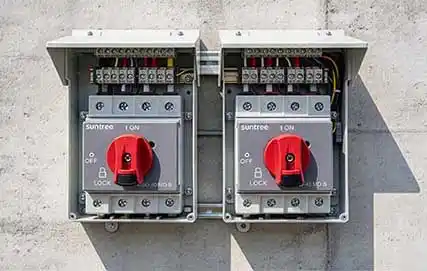
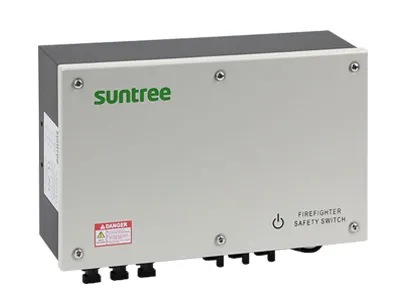
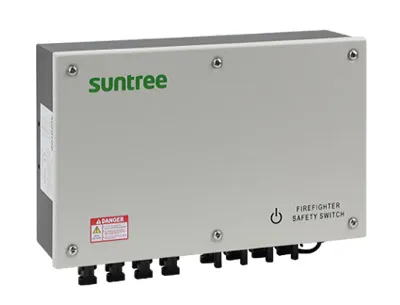
When you invest in a solar PV system, you're likely familiar with the major components: panels, inverters, and racking. But there's a smaller, critical device that often flies under the radar—until it stops working. The panel level rapid shutdown switch (RSD) is a safety device designed to de-energize individual solar panels in an emergency, protecting firefighters and first responders from high-voltage DC shock.
But here's the uncomfortable truth: these devices don't last forever. And when they fail, your entire system may shut down or become a safety hazard.
In this guide, we'll cut through the marketing fluff and give you a clear, data-driven answer to the question every system owner and installer eventually asks: How long does a panel level RSD actually last?
The Manufacturer's Rated Life – What Do Specs Say?
Let's start with what's printed on the datasheet. Most reputable RSD manufacturers provide three distinct lifetime ratings, and confusing them is a common mistake.
Mechanical Life
Mechanical life refers to how many times the switch can physically open and close under no-load conditions. For most panel level RSDs, this number falls between 1,000 and 3,000 cycles. That's the number of times you could actuate the switch mechanism before the internal springs, contacts, or housings show significant wear.
To put this in perspective: if you perform a manual shutdown test once per month, you'd hit 1,000 cycles in over 83 years—far longer than the panel's useful life. So mechanical wear from testing is rarely the limiting factor.
Electrical Life
Electrical life is a different story. This measures how many times the switch can interrupt current under load—when DC power is actually flowing. Because DC arcs are notoriously difficult to extinguish, electrical life is significantly shorter, typically ranging from 100 to 500 operations.
That said, most RSDs are designed to operate electronically via a power line communication (PLC) signal rather than being manually thrown under load. The actual load-break events in a typical residential system may number fewer than a dozen over the entire system lifetime, making this rating more relevant for commercial systems with frequent shutdown protocols.
Recommended Service Life
Here's the number you really care about: most manufacturers recommend replacing panel level RSDs every 10 to 15 years. This aligns closely with the expected useful life of the solar panels themselves, but it's important to understand that this is a service recommendation, not a hard failure point. Some units fail earlier; others keep chugging along well past the 15-year mark.
Key takeaway: The sticker on the box says 10–15 years, but real-world performance varies widely based on conditions we'll cover next.
Environmental Factors That Accelerate Aging
If you want to predict how long your RSD will actually last, look first at its environment. These devices are mounted directly on or near your solar panels, which means they're exposed to the full fury of Mother Nature—24/7, 365 days a year.
Extreme Heat – The Silent Killer
Heat is the number one enemy of power electronics. Every 10°C increase in operating temperature can cut the lifetime of electrolytic capacitors in half—and while not all RSDs use capacitors, the rule applies broadly to semiconductor junctions and solder joints.
Consider this: a dark-colored roof in Arizona or Southern California can reach surface temperatures of 70°C to 85°C on a sunny summer afternoon. The RSD, mounted inches above that surface, bakes in radiant heat while also dissipating its own waste heat from current flow. Under these conditions, internal component aging accelerates 2–3 times faster than in a temperate climate.
Real-world data from field studies suggests that RSDs in hot, unshaded rooftop installations may show measurable performance degradation as early as year 7 or 8—well before the manufacturer's 15-year recommendation.
UV Radiation – More Than Skin Deep
Ultraviolet radiation doesn't just fade your car's paint—it attacks the polymer housings of outdoor electronics. Over time, UV exposure makes plastic enclosures brittle, chalky, and prone to micro-cracking.
Once the housing develops even hairline cracks, moisture ingress becomes inevitable. And once moisture gets inside, corrosion follows. In our experience, UV-damaged housings are the leading visual indicator of an RSD nearing end-of-life, even if the electronics are still functional.
Moisture and Humidity – The Corrosion Pathway
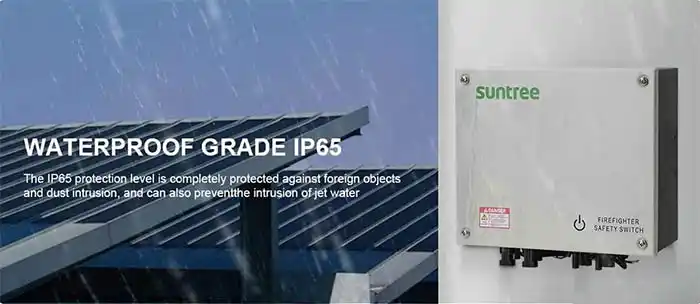
Humidity is insidious. Even in IP65-rated enclosures, the rubber gaskets and O-rings that keep water out will harden and lose elasticity over years of thermal cycling.
When seals fail, humid air enters the enclosure. During cool nights, that moisture condenses on circuit boards, creating the perfect environment for electrochemical migration—a process where metal ions move across the PCB surface under voltage, eventually creating conductive bridges that cause short circuits or signal interference.
The takeaway? If you live in a region with high humidity or frequent rain, your RSD's effective lifespan may be closer to 8–12 years than the advertised 15.
Salt Air – The Coastal Accelerant
For systems within a few miles of the coast, salt spray adds another layer of degradation. Salt particles are hygroscopic and conductive. When they settle on exposed terminals or seep into enclosures, they accelerate galvanic corrosion between dissimilar metals—particularly at the connection points between the RSD and the panel connectors.
Coastal installers know this all too well: stainless steel terminal screws can still corrode in salt-laden air, and once contact resistance increases, localized heating further accelerates the damage. In severe cases, we've seen RSDs in beachfront installations require replacement as early as 5–7 years.
Operational Factors That Matter
Environment isn't everything. How your system is operated and maintained plays a significant role in determining RSD longevity.
Frequency of Shutdown Events
Every time the RSD opens under load, the contacts experience a tiny amount of erosion from arcing. While modern devices use arc-suppression techniques, the wear is cumulative.
Systems that undergo frequent testing—say weekly or daily—will wear out contacts faster than systems tested monthly or quarterly. We typically recommend monthly functional tests and leave it at that. More frequent testing offers diminishing safety returns while adding unnecessary wear.
Load Current Level
Here's something many people overlook: an RSD operating at 90% of its rated current runs significantly hotter than one at 50% load. The relationship is roughly quadratic—doubling the current quadruples the I²R heating losses inside the switch.
If your system consistently operates near the RSD's maximum current rating, expect internal temperatures to run 10–15°C higher than a derated installation. Over 10 years, that temperature differential can translate to 2–3 years of additional aging.
When designing your system, we recommend selecting RSDs with a current rating at least 25% higher than your maximum string current. This headroom keeps temperatures down and extends service life.
Quality of Installation
This one's on the installer. Loose terminal connections create high-resistance points that generate localized heat. A single under-torqued wire lug can reach 100°C or more while the rest of the device sits at ambient temperature. That heat cooks nearby components and accelerates failure.
Worse, loose connections can cause intermittent communication faults, leading the inverter to misinterpret the RSD as failed when it's actually just a wiring issue. Use a torque wrench, follow the manufacturer's specifications, and inspect terminations during annual maintenance.
Signs That a Panel Level RSD Is Nearing End of Life
How do you know when it's time to replace an RSD before it fails catastrophically? Watch for these warning signs:
Inverter Communication Errors
If your monitoring platform starts reporting frequent "RSD communication lost" or "string error" messages for a specific panel or string, that's often the first clue. These errors can indicate failing power line communication (PLC) transceivers inside the RSD—components that are especially sensitive to heat and humidity.
Hotspots Detected by Thermal Imaging
During routine maintenance, point a thermal camera at your array. A single RSD that's 5–10°C hotter than its neighbors under identical conditions is a red flag. This temperature differential often indicates increased contact resistance, impending failure, or internal short circuits.
Physical Deterioration
-
Cracked or discolored housing: UV damage has compromised the seal.
-
Visible condensation inside the clear cover: Moisture has breached the enclosure.
-
Corroded or greenish terminals: Salt or moisture is attacking connections.
Any of these visual signs warrant immediate replacement, regardless of the device's age.
Erratic Shutdown Behavior
During a functional test, if a specific RSD takes significantly longer to restore power after the shutdown signal ends—or requires multiple resets—the internal control logic is degrading. Don't wait for it to fail completely.
A Practical Replacement Schedule Recommendation
So, when should you replace your panel level RSDs? Here's our practical, field-tested framework:
| Environment | Recommended Replacement Interval | Rationale |
|---|---|---|
| Standard (suburban, temperate climate, moderate roof heat) | 12–15 years | Aligns with panel lifecycle; replace at the same time as inverter or during major system service. |
| Harsh (high-heat roof, coastal salt spray, high humidity, industrial pollution) | 8–10 years | Accelerated aging from multiple environmental stressors. |
| Any environment with visible degradation or communication errors | Immediately | Don't wait for scheduled replacement; failing devices pose safety risks and can take down entire strings. |
We also recommend a mid-life inspection at year 7, including:
-
Visual inspection of all housings and connectors
-
Thermal imaging of every RSD under normal operating load
-
Functional shutdown/restore test with timing verification
This inspection often catches early-stage degradation before it causes a system outage.
Frequently Asked Questions (FAQ)
Q1: Can a panel level RSD last as long as the solar panels?
A: It's possible, but not guaranteed. While high-quality RSDs can reach 20+ years in mild climates, electronic components age faster than silicon solar cells. Most manufacturers recommend inspection or replacement at the 10- to 12-year mark, which is roughly mid-life for a 25-year panel warranty.
If your panels are still producing well at year 15, we advise proactively replacing the RSDs rather than waiting for failure. The cost of replacement is minimal compared to the safety risk and downtime of a failed unit.
Q2: Does frequent testing reduce the lifespan of an RSD?
A: It depends on what you mean by "frequent." Monthly functional testing has negligible impact on lifespan—you're talking about 120 operations over a decade, well within the mechanical and electrical life ratings.
Daily or weekly testing, however, does add cumulative contact wear and thermal cycling stress. Unless required by your AHJ or a specific safety protocol, stick to monthly tests and save the wear.
Q3: What happens if an RSD fails after its expected lifespan?
A: Two scenarios, both undesirable:
-
Safety failure: The RSD may fail to open during an emergency, leaving high-voltage DC present on the array and endangering first responders. This is the primary reason RSDs exist, and a failure here is a critical safety violation.
-
Communication failure: The RSD may stop responding to the inverter's keep-alive signal, causing the inverter to shut down the entire string as a precaution. Your system may produce zero power until the failed unit is identified and replaced.
In both cases, downtime and safety risks outweigh the modest cost of preventive replacement.
Summary & Next Steps
Here's what to remember:
-
Manufacturer-rated service life: 10–15 years, but treat this as a guideline, not a guarantee.
-
Real-world lifespan varies widely: Heat, UV, moisture, and salt air are the primary accelerators.
-
Operational factors matter: Overloading and loose connections shorten life; proper design and installation extend it.
-
Watch for warning signs: Communication errors, thermal hotspots, and physical deterioration all demand immediate attention.
Our practical recommendation: schedule a comprehensive RSD inspection at year 7, plan for replacement at year 12 in standard environments, and move that timeline up to year 8–10 in harsh conditions.
Don't wait for failure to remind you that RSDs have a finite life.
At SUNTREE, we help system owners stay ahead of component aging. Our RSD Lifecycle Reminder Service tracks installation dates, environmental risk factors, and inspection history—sending you automated notifications when your devices approach their recommended replacement window.
[Register for SUNTREE's RSD replacement reminders today] and ensure your system stays safe, code-compliant, and producing power for decades to come.