 English
 Bahasa Melayu
 Suomen kieli
 عربي
عربي  Português
 Français
 Pусский
 Español
High-Voltage AC Fuse for Commercial Building Power Supply Safety


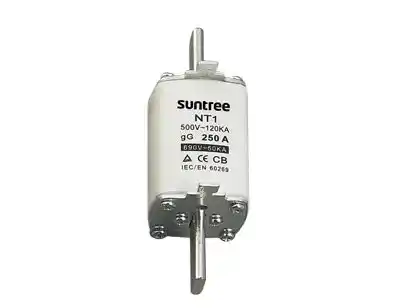
When you’re responsible for a commercial building’s power supply, the last thing you want is a catastrophic electrical failure. The answer to preventing this lies in a single, critical, and often overlooked component: the high-voltage AC fuse. More than just a simple piece of wire, a properly specified AC Fuse is your first and most reliable line of defense against overcurrents, short circuits, and electrical fires. In this deep dive, we’ll move beyond the datasheet to explore why selecting the right HV AC fuse isn’t just an electrical specification—it’s a core business continuity and safety strategy. We’ll cut through the jargon and explain what you really need to know, highlighting how specialists like Suntree approach protection with a mindset geared toward real-world building operations.
Why Your Building's AC Fuse is the Most Important Safety Component
Let me paint a picture. It’s 2 AM in a 20-story mixed-use tower. The HVAC systems are humming, server rooms are cooling, and security lights are on. Suddenly, a critical fault develops in a 13.8kV feeder cable in the basement switchgear. There’s no bang, no flash of light, no frantic calls to the fire department. Why? Because a correctly rated high-voltage current-limiting fuse performed its solitary duty. It sacrificed itself, isolating the fault with surgical precision before it could cascade into a million-dollar disaster.
This isn’t magic, it’s engineered protection. An AC Fuse operates on a beautifully simple principle: a calibrated element that melts under excessive overcurrent protection conditions, breaking the circuit. But in a high-voltage commercial setting, this simplicity masks immense complexity. We’re talking about interrupting massive levels of fault current—potentially tens of thousands of amps—safely and containing the immense arc energy within its robust fuse body. Unlike a circuit breaker, it has no moving parts to service, jam, or hesitate. When it acts, its operation is final, definitive, and unambiguous. This reliability is why, from the main service entrance to capacitor banks and transformer protection, the HV AC fuse remains irreplaceable. It’s the silent, non-negotiable sentinel standing between normal operations and chaos.
Key Specifications for Commercial-Grade High-Voltage AC Fuses
Any electrician can look up a voltage and current rating. But specifying a fuse for a commercial building’s power distribution system requires understanding a vocabulary that speaks to survival under extreme duress. Here are the specs that truly matter:
-
Interrupting Rating (IR): This is the fuse’s knockout punch. It’s the maximum short-circuit current the fuse can safely interrupt without rupturing. In urban areas with strong utility grids, available fault currents can be staggeringly high. Specifying a fuse with an IR lower than the available fault current at its point of installation is like using a bicycle lock on a bank vault—it creates a catastrophic false sense of security. According to standards like UL 248 and IEC 60282, a high-performance fuse must have an interrupting rating that meets or exceeds the system’s calculated maximum fault current.
-
Time-Current Characteristic (TCC) Curves: This is the fuse’s personality. It’s a graphical chart showing how quickly it will operate at various levels of overload protection and fault current. A “fast-acting” fuse protects sensitive equipment like transformers from damaging through-faults, while a “time-delay” characteristic allows for harmless motor inrush currents without nuisance operation. Coordinating these curves with upstream and downstream devices is an art form, ensuring only the fuse closest to a fault blows, minimizing outage impact.
-
Current-Limiting Ability: This is the superhero trait. A true current-limiting fuse doesn’t just interrupt a fault; it acts so incredibly fast (within the first ¼ cycle) that it prevents the short-circuit current from ever reaching its terrifying peak potential. It literally “chokes off” the fault, drastically reducing the destructive thermal and magnetic forces (I²t let-through energy) on your switchgear, buses, and cables. This isn’t just protection; it’s an insurance policy for your entire electrical infrastructure.
The High Cost of Choosing the Wrong Fuse
I’ve walked into substations after a non-current-limiting fuse failed to interrupt properly. The smell of ozone and burnt metal hangs in the air. The scene isn’t just a blown fuse; it’s a ruptured fuse body, scorched insulation, and often, a destroyed switchgear compartment that now requires a weeks-long, incredibly expensive rebuild. The direct costs—repairs, downtime, lost revenue—are enormous.
But the indirect costs are worse. Consider a modern data center. A fault in the power distribution that escalates due to inadequate fuse protection can trigger an outage affecting thousands of servers. We’re talking about per-minute downtime costs that can reach five or even six figures, not to mention reputational damage that’s impossible to quantify. In a hospital, the stakes are measured in more than dollars. Life-critical systems depend on clean, stable, and protected power. The choice of a high-voltage AC fuse here transcends engineering—it becomes an ethical imperative.
This is where the “commodity trap” is deadly. Purchasing electrical fuses based solely on the lowest bid is a profound risk. You might be installing a component that meets the bare minimum standard on paper but lacks the rugged construction, precise calibration, and proven interrupting rating to perform when the unimaginable happens.
Engineering Protection, Not Just Parts Supply
At Suntree, we don’t view ourselves as just another supplier of electrical protection devices. We see our role as diagnostic partners in system integrity. Our approach starts with listening, not just selling.
Our process is scenario-driven: We ask questions most catalogs don’t. What’s the specific application? Is it for a main feeder, a dry-type transformer in a cramped electrical room, or an expensive medium-voltage motor? What are the one-line diagram details? What is the utility’s stated available fault current? This allows us to move beyond a generic part number. For instance, the fuse you need for protecting a capacitor bank (which has unique inrush currents) is fundamentally different from one guarding a transformer, which must withstand magnetizing inrush.
We champion a “Protection Ecosystem” mindset. A fuse doesn’t operate in a vacuum. Our engineers excel in protective device coordination studies. We help you model how our Suntree current-limiting fuses interact with your existing circuit breakers and relays. The goal is seamless selectivity: the fuse closest to a fault clears it instantly, while upstream devices remain blissfully unaware, keeping the rest of your building online. This tailored coordination is the cornerstone of maximizing uptime.
Furthermore, we understand that installation and maintenance are part of the safety chain. Our fuse holders and mounting accessories are designed for secure, unambiguous installation, reducing human error. We provide clear, durable labeling and support documentation that turns a complex specification into actionable information for your maintenance team.
How to Choose High-Voltage Fuses
So, how do you, as a facility manager, electrical engineer, or contractor, navigate this critical choice? Here is a practical, non-academic checklist:
-
Demand the Data: Never accept a fuse without its official TCC curves and a certified test report for its interrupting rating. Reputable manufacturers like Suntree provide these as a matter of course.
-
Think “System,” Not “Component”: Work with a supplier who asks about your entire system. The right partner will want to see your one-line diagram to ensure proper coordination and overcurrent protection.
-
Prioritize Current-Limitation: For the vast majority of commercial applications, insist on a verified current-limiting fuse. The reduction in let-through energy is the single most effective way to safeguard your capital investment in switchgear.
-
Consider the Total Lifecycle: Look at service support. Does the supplier offer technical assistance? Can they provide replacement fuses with identical characteristics decades from now? Consistency is key for long-term safety.
-
Trust, But Verify: Partner with brands that have third-party certifications (UL, IEC) and a transparent track record. The Suntree name, for example, is built on a foundation of rigorous testing and real-world validation in commercial building applications worldwide.
Conclusion
The safety and resilience of your commercial building’s electrical supply network hinge on decisions made quietly, often in planning rooms far from the hum of the machinery they protect. Choosing the right high-voltage AC fuse is one of those pivotal decisions. It’s a commitment to choosing a component that you hope never has to work, but one you must be utterly confident in when it does.
This isn’t a place for guesswork or commoditized thinking. It requires expertise, a systems perspective, and products engineered to a standard of reliability that matches the value of what they protect.
Ready to move beyond generic part numbers and build a truly resilient protection strategy? Let’s have a conversation about your specific power distribution challenges. Contact the Suntree protection specialists today for a no-obligation review of your one-line diagram and a tailored recommendation. Let us show you how engineered protection can bring peace of mind.