 English
 Bahasa Melayu
 Suomen kieli
 عربي
عربي  Português
 Français
 Pусский
 Español
High-Performance Solar Cables: The Veins of Photovoltaic Energy Systems
Publish Time: Author: Site Editor Visit: 1716


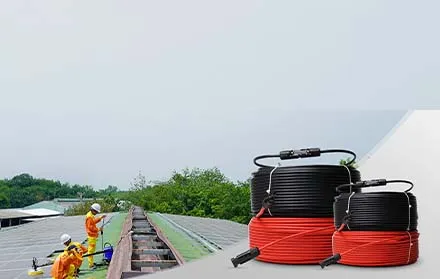
Solar cables serve as the critical arteries in photovoltaic (PV) systems. These specially designed power cables efficiently transfer DC power from solar panels to inverters without significant energy loss. Key features include:
- 1. UV-resistant insulation (withstand 20+ years of sun exposure)
- 2. Halogen-free flame retardancy (meets IEC 62930 standards)
- 3. Weatherproof construction (operating range: -40°C to 120°C)
1. Core Solar Cable Technologies
1.1 Conductors:
- Tinned copper cores (enhanced corrosion resistance)
- Class 5/6 stranding (optimal flexibility for rooftop installations)
- 4mm² to 10mm² cross-sections (balancing current capacity vs. voltage drop)
1.2 Insulation Materials:
- Cross-linked polyethylene (XLPE) vs. Ethylene Propylene Rubber (EPR)
Parameter XLPE EPR Max Temp 120°C 150°C UV Resistance ★★★★☆ ★★★☆☆ Flexibility ★★★★☆ ★★★★★
2. Applications Across PV Systems
2.1 Utility-Scale Solar Farms
- PV wire types: PV1-F, USE-2, RHW-2
- Underground cabling solutions with double-layer moisture barriers
2.2 Commercial Rooftop Installations
- Optimized bend radius cables for constrained spaces
- Fire-rated solar cables for building code compliance
2.3 Floating Solar Plants
- Saltwater-resistant compounds with extra mechanical protection
- Buoyancy-enhanced designs using closed-cell foam layers
3. Emerging Innovations
3.1 Smart Monitoring Cables
- Integrated fiber optics for real-time temperature/performance tracking
- Example: HUBER+SUHNER's RadiSolar with 40% faster fault detection
3.2 Sustainable Materials
- Bio-based insulation (e.g., Dow's ECOFAST™ Purification Systems)
- Recyclable copper with 95% post-consumer content
4. Standards & Certifications
| Standard | Scope | Key Test Criteria |
|---|---|---|
| IEC 62930 | PV system cables | UV aging, flame propagation |
| UL 4703 | North American PV wires | Wet insulation resistance |
| TÜV 2PFG 1990 | German market | Cold bend at -40°C |
Pro Tip: Always verify IIR (Insulation Integrity Rating) ≥12kV/mm for >1MW systems
5. Future Trends
- Higher voltage systems (1500V+ cables with 35mm² conductors)
- Integrated DC optimizers reducing BOS costs by ~8%
- Self-healing insulation using microencapsulated polymers
Industry projections: Global solar cable market to reach $2.3B by 2030 (CAGR 6.5%)