 English
 Bahasa Melayu
 Suomen kieli
 عربي
عربي  Português
 Français
 Pусский
 Español
DC Surge Protector:The Guardian of Safety


What is Surge Protector Device?
The surge protector is a device that limits the instantaneous overvoltage that surges into power lines and signal transmission lines within the voltage range that the equipment or system can withstand, or discharges powerful lightning currents into the ground to protect the protected equipment or system from damage caused by impact.
A DC surge protection device is a device that protects against the effects of voltage surges in a direct current (DC) power system. A DC surge protection device is typically used to protect sensitive equipment from damage caused by these voltage surges.
What is the Classification of Surge Protection Device?
Surge protections are classified into three categories. Type1, Type2, and Type3.
Type 1 SPDs have a 10/350 s current wave and protect against direct lightning strikes. In central inverters, Type 1 SPDs are employed. Type 2 SPDs protect indirect lightning strikes with waveform of 8/20 seconds. An 8/20 s waveform denotes a strike with an 8 s rising time and a 20 s duration to half-peak. Type 2 SPDs prevent over-voltage from spreading into electrical installations and devices. Finally, type 3 cables must have a minimum conductor length of 10 meters between the electrical service panel and the site of use.
What are the application scenarios for a DC SPD?
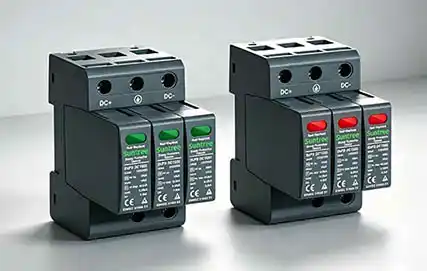
The Suntree DC SPD SUP2H series is suitable for applications in direct current circuit with a rated voltage of DC500V to DC1500V. It can absorb overvoltage when the power supply is suddenly interrupted to ensure that the equipment is not damaged. It has a wide range of applications, primarily in the following fields:
- Military field: In the military field, communication equipment and navigation equipment require stable DC power supply, and DC surge protectors ensure the stable operation of these equipment.
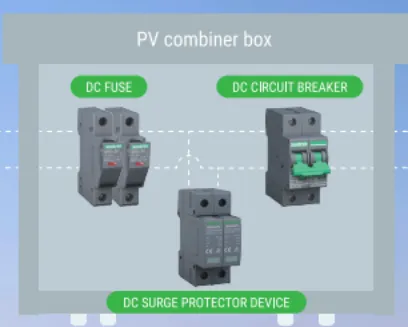
- New energy power generation field: In the new energy power generation field ,The application of DC SPD is mainly in the photovoltaic power generation and wind power generation industries. Photovoltaic systems such as photovoltaic combiner boxes, inverters, etc. will be equipped with surge protectors. Wind turbines also have very comprehensive requirements for surge protectors. All ports such as power lines and signal lines are required to install surge protection.
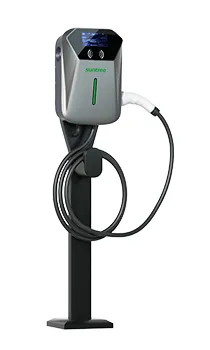
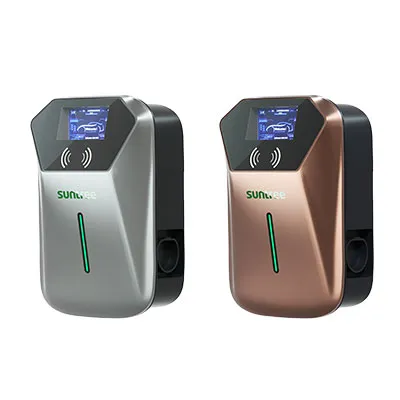
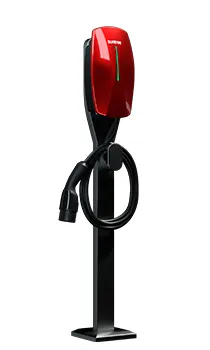
- Electric vehicles field: In DC charging piles, DC circuits also need surge protection. Installing a DC SPD can effectively protect charging equipment from weather conditions such as lightning strikes.
How are DC surge protector Devices installed in PV systems?
Photovoltaic systems have high DC system voltages, up to 1500V, which requires the use of surge protectors specifically designed for photovoltaic systems. The following are the installation recommendations of the direct flow surge protector in the photovoltaic system:
- Select the right protector: Ensure that the selected protector complies with the relevant international and national standards, which specify the performance requirements and test methods for SPD.
- Installation position: Install T1+T2 or T2 type direct flow surge protector in the DC busbar, which can effectively protect the DC side of the photovoltaic module and inverter from lightning induction or direct attack caused by overvoltage.
- Connection mode: Connect the positive electrode of the protector to the positive electrode of the DC bus box, and connect the negative electrode to the negative electrode of the DC bus box. Make sure all connections are secure and use appropriate cables and connectors.
- Grounding considerations: To ensure that the energy flows to the ground first to prevent over-voltage, ensure that the protector is properly grounded. This is a key step to prevent over-voltage from damaging the equipment.
- Maintenance and inspection: Regularly check the working status of the protector and whether the connection is firm. If any problem is found, it should be replaced or repaired immediately.