Product function
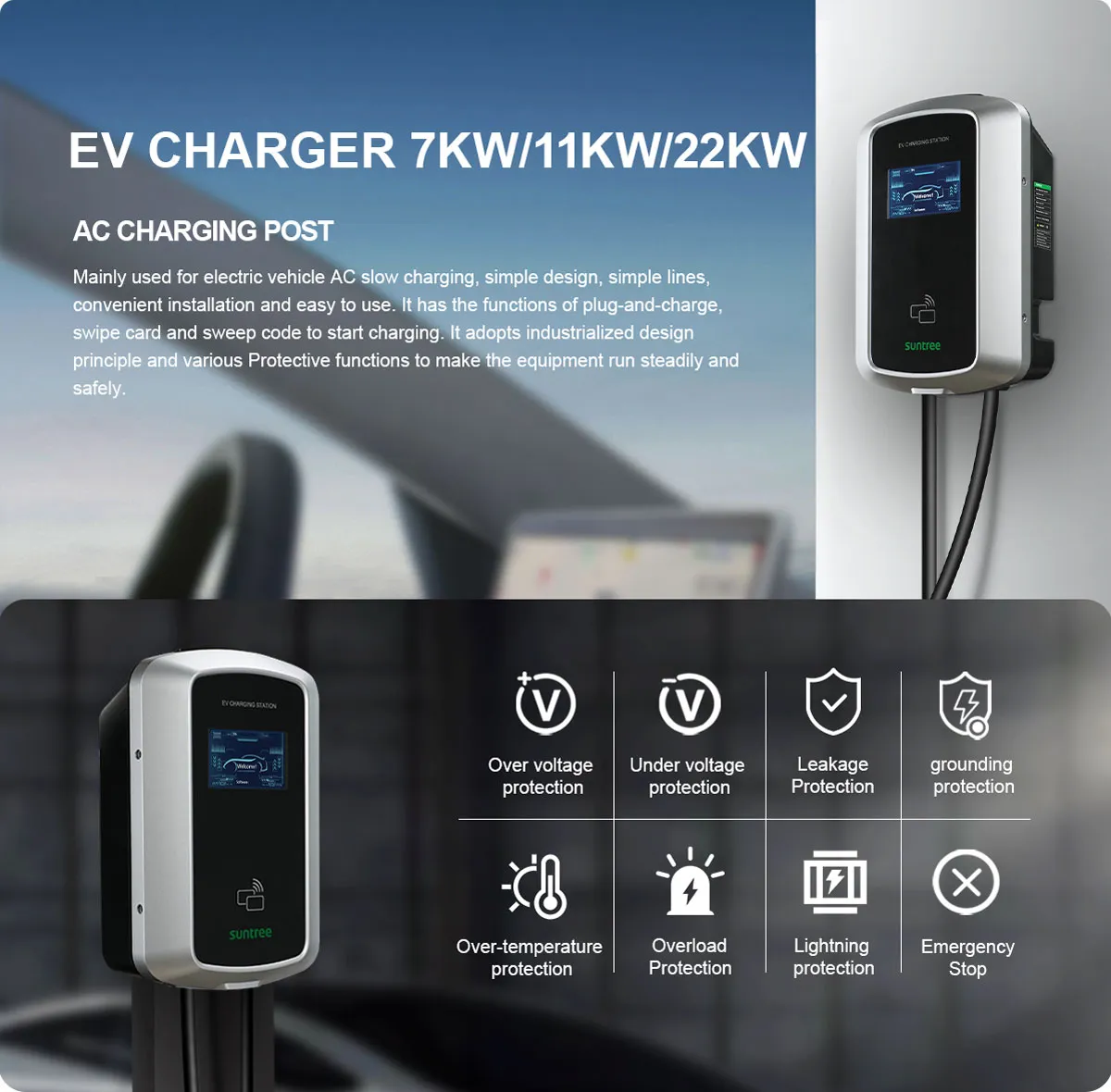
1. With swipe card start and remote stop/start, Automatically end when fully charged.
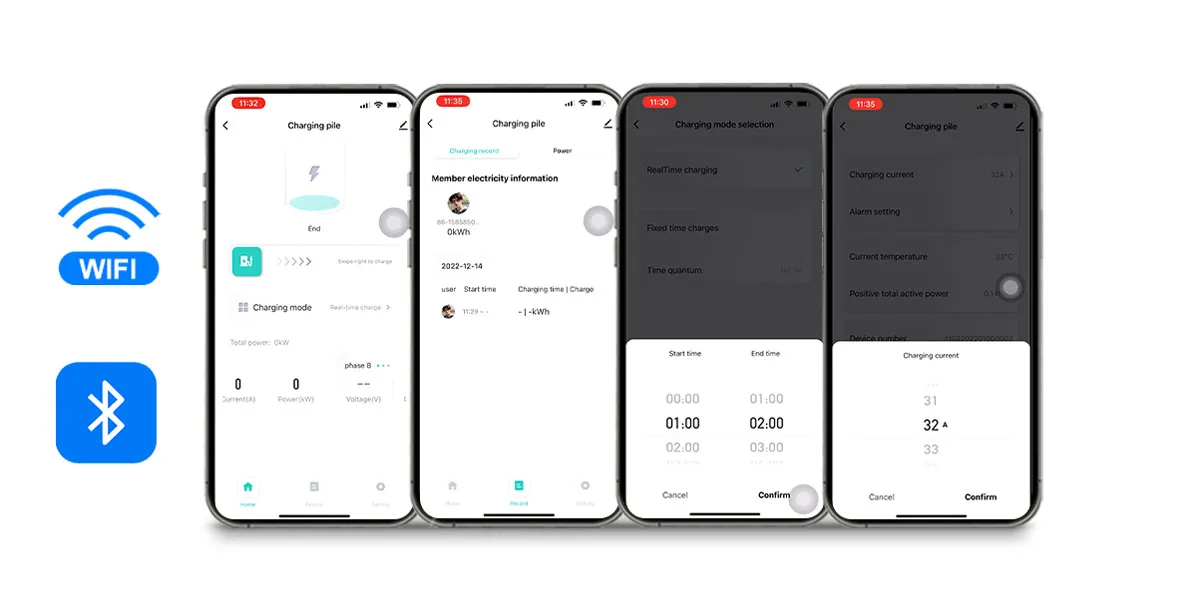
2. Appoint charging function, can be charged according to the user's demand, full automatic end.
3. History record function can query historical charging records and expense records.
4. Equipped with display screen to display SOC information in real time and estimate full time.
5. Convenient charging, plug and play.
Note: 4G module/Ethernet (network cable) function can be optional, scan the code to charge, scan the code to pay,
contact our company (or the customer's designated platform) Mobile APP to check charging information, etc.

ELECTRICAL TECHNICAL REFERENCE
| Parameter |
|
| Working voltage |
AC 220V-400V |
| European standard TYPE 2/ CHINA STANDARD GB/T |
|
| Rated power |
7KW |
11KW |
22KW |
| Operating current |
32A |
16A |
32A |
| American standard TYPE 1 |
|
| Rated power |
7Kw |
9Kw |
11Kw |
| Operating current |
32A |
40A |
50A |
| Frequency |
50Hz/60Hz |
| lP Degree |
IP55 |
| Use environment |
|
| Working temperature |
-40℃ - +70℃ |
| Working humidity |
<95 %HR |
| The cooling way |
Natural air cooling |
| Display function |
|
| Display parameters |
Charge voltage, charge current, charge quantity, SOC, fault code |
| Physical size |
|
| Fuselage size |
320*220*110mm |
| lnstallation mode |
Column mounted (floor mounted) or wall mounted Install optional |

 English
 Bahasa Melayu
 Suomen kieli
 عربي
عربي  Português
 Français
 Pусский
 Español